
The Science Behind Perio Protect: How We Treat Gum Disease at the Source
If you've ever wondered why brushing and flossing well still isn't always enough to fully resolve gum disease, there's a good reason for that — and it comes down to where the problem actually lives.
Periodontal disease develops in pockets between your gums and teeth, spaces that are simply too deep for a toothbrush or floss to reach effectively. Inside those pockets, the environment shifts: oxygen-loving, healthy bacteria give way to a different kind of bacteria that thrives without oxygen and does real damage to the tissue around it. That shift has a name — dysbiosis — and it's the reason gum disease can keep progressing even in patients who are diligent about their home care.
This is where Perio Protect comes in.
Reaching What a Toothbrush Can't
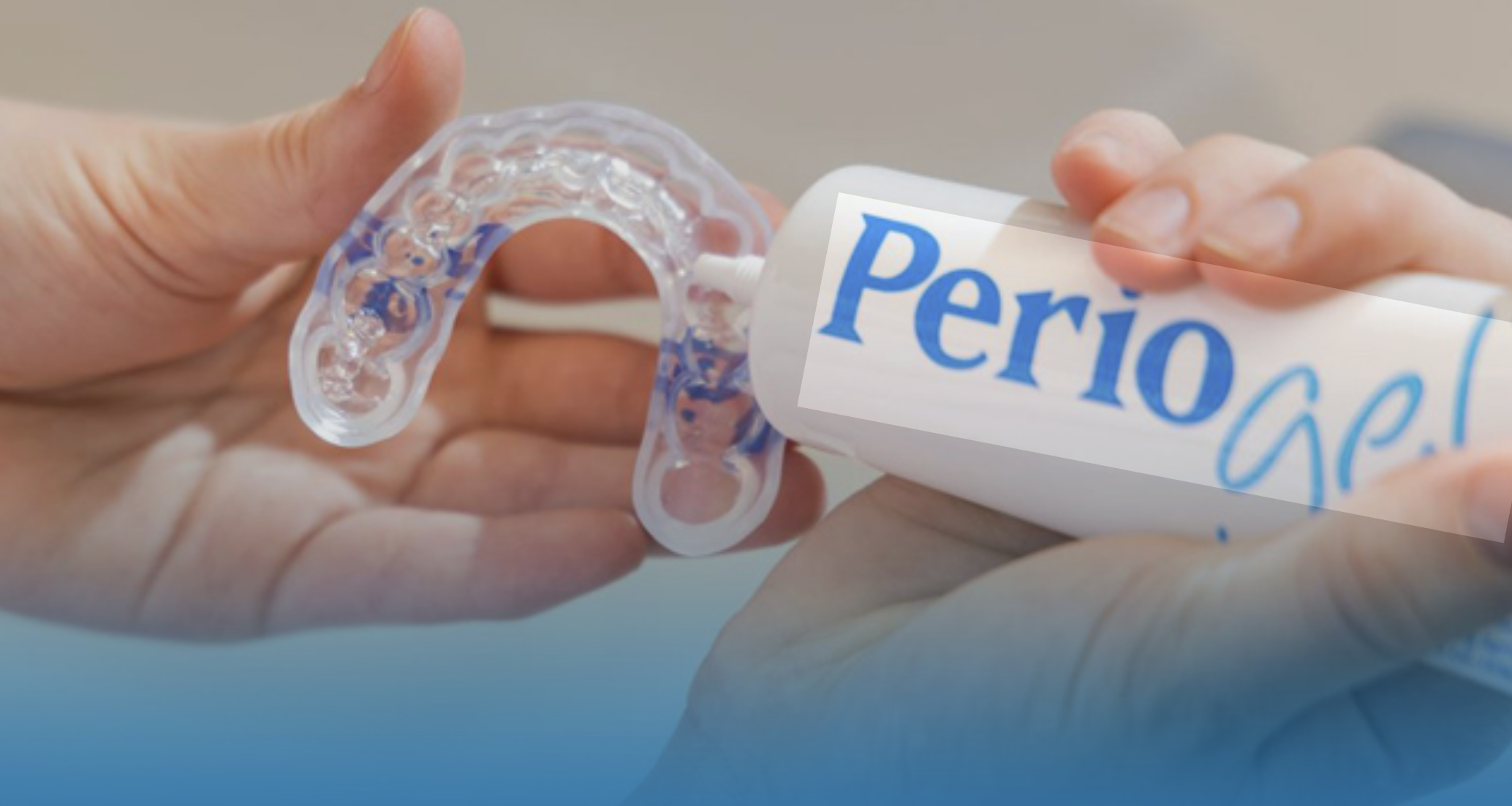
We use the Perio Protect Method™, which relies on custom-fitted trays — called Perio Trays™ — built with internal seals designed to hold a prescribed gel directly against the gumline and guide it down into those hard-to-reach pockets. The gel itself is a 1.7% hydrogen peroxide formulation, and it works through a fairly elegant mechanism: it raises the oxygen level inside the pocket dramatically, creating conditions that are hostile to the low-oxygen bacteria driving the disease, while allowing the healthy, oxygen-tolerant bacteria a chance to return. Research measuring this effect has found the trays can increase oxygen saturation in the pocket more than fivefold — enough to meaningfully shift that bacterial balance back toward health.
It's a device, not a rinse or a one-time treatment. The Perio Trays are FDA-cleared, and they're meant to be part of an ongoing homecare routine, working alongside — not replacing — your regular cleanings and any scaling and root planing your hygienist recommends. Studies comparing the two approaches together versus scaling and root planing alone have found the combination performs better, with greater reductions in both pocket depth and bleeding.
Why This Matters Beyond Your Gums
Here's something that surprises a lot of patients: the tissue inside a mouth with widespread gum disease can add up to an open wound roughly the size of your palm. That's a lot of surface area for bacteria and inflammatory byproducts to have ongoing access to your bloodstream — which is part of why gum disease doesn't stay contained to the mouth.
Research on the Perio Protect Method has found it can meaningfully lower certain markers in the blood associated with body-wide inflammation — including some linked to cardiovascular risk. We're not going to overstate what that means for any one person's heart health, but it's a good reminder that treating the gums well is doing more than just protecting your teeth. It's addressing a source of ongoing inflammation that your whole body has to deal with.
What This Looks Like Day to Day
None of this requires anything complicated from you. It's a nightly (or as-directed) routine: a thin line of gel along the tray, worn for the prescribed time, with occasional check-ins to make sure the fit is comfortable and the treatment is doing what we want it to do. If anything feels off — sensitivity, a spot that doesn't feel right — that's exactly the kind of thing worth mentioning at your next visit, since small adjustments to the tray usually solve it.
When appropriate, we may also incorporate therapies such as PRF and ozone as part of an individualized treatment plan to support healing.
Depending on the severity of your gum disease, we may also recommend evaluation or treatment by a periodontist. Perio Protect doesn't replace professional periodontal care, but for many patients it can be a valuable part of a comprehensive treatment plan by helping reduce the bacterial load between visits and supporting long-term gum health.