How to Choose the Right Toothpaste: A Dental Perspective
One of the questions I hear most often in my practice is, "Dr. Burke, what's the best toothpaste?" It seems like it should have a simple answer, but it doesn't, because every mouth is different. Instead of chasing a one-size-fits-all product, I encourage my patients to understand a few core principles first. Once you understand those, choosing the right product for your own mouth becomes much easier.
Here's the three-step approach I walk patients through.
Step 1: Find the Root Cause
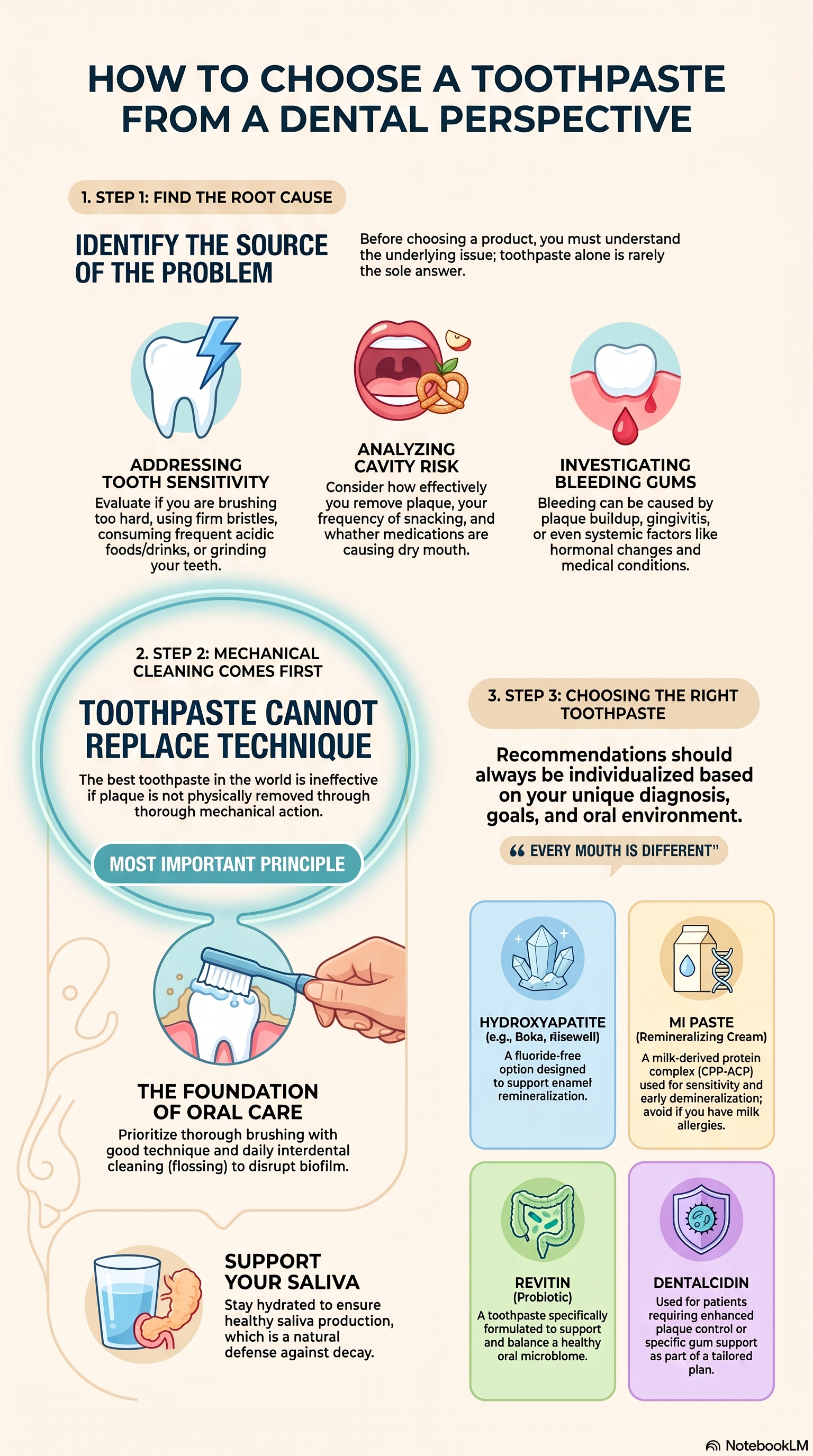
Before reaching for a tube because of a flashy ad or a friend's recommendation, it's worth understanding why you're experiencing a particular issue in the first place. Toothpaste can support your oral health, but it can't replace a proper diagnosis.
If you're dealing with sensitivity, I want to know: Are you brushing too hard, or using a toothbrush with bristles that are too firm? Sensitivity can also come from an acidic diet, teeth grinding or clenching, gum recession, exposed roots, or dry mouth.
If you're getting cavities repeatedly, the questions shift. Are you removing plaque effectively every day? How often are you snacking? Are sugary or acidic drinks a regular part of your routine? Certain medications reduce saliva production, and the health of your oral microbiome plays a role too.
If your gums are bleeding, it could be plaque buildup, gingivitis, periodontal disease, hormonal changes, dry mouth, or an underlying medical condition.
Getting to the root cause is what allows us to recommend something that actually addresses the problem, rather than just masking it.
Step 2: Mechanical Cleaning Comes First
Here's the principle I want every patient to walk away with: no toothpaste, no matter how advanced, can remove plaque that hasn't been physically cleaned away. Before we even talk about which product might help you, I want to make sure the fundamentals are solid.
Brush thoroughly, with a technique that reaches every surface.
Clean between your teeth daily, with floss or another interdental cleaner that works for you.
Stay hydrated, since healthy saliva is one of your mouth's best natural defenses.
Once those habits are consistent, the right toothpaste becomes a meaningful addition rather than something doing all the work on its own.
Step 3: Choosing the Right Product
There isn't a single toothpaste that's right for everyone, but here are a few categories I often discuss with patients, depending on their goals:
Hydroxyapatite toothpastes (like Boka or Risewell) — a fluoride-free option many patients choose to support enamel remineralization.
Microbiome-focused toothpaste (like Revitin) — a prebiotic formula designed to support a healthy balance of oral bacteria.
Gum support (like Dentalcidin) — sometimes recommended as part of an individualized plan for patients needing extra plaque or gum support.
Targeted remineralization (like MI Paste) — not technically a toothpaste, but a milk-derived remineralizing cream often used for sensitivity or early enamel demineralization. Not appropriate if you have a milk protein allergy.
Our Philosophy
My goal was never to hand patients a list of products and send them on their way. It's to teach the principles behind oral health so families can make informed, confident choices on their own — choices that support prevention, healing, and long-term whole-body wellness, not just a quick fix.
The right toothpaste should fit your specific diagnosis, your health goals, and your preferences. If you're dealing with ongoing sensitivity, bleeding gums, or cavities that keep coming back, that's worth a real conversation. We'd love to help you find the root cause and build a plan that actually works for your mouth.